Initiating
The climbing subtlety found in current autos compels a comprehensive deep grasp of diagnostic tools, specifically touching on On-Board Diagnostics II (OBD2) and Tire Pressure Monitoring Platforms (TPMS). Among Europe, Asia, and the US, these technologies operate using different frequencies. OBD2 regulations are largely consistent globally, chiefly utilizing ISO 9141-50, KWP2000, CAN, and others, but regional executions can cause minor divergences. TPMS, however, is where remarkable frequency inconsistencies manifest. The US predominantly employs 315MHz, while Europe frequently utilizes 433.92MHz, and Asia displays a more fragmented range including both frequencies and other bands. Consequently, accurate diagnostic equipment must be equipped with the facility to comprehend these plentiful frequencies to help effective maintenance and maintenance.
Analyzing TPMS Sensor Frequencies: A Global Guide (Europe, North America, Asia)
Learning tire pressure tracking system (TPMS) probe rates among the universe becomes difficult. Typically, North America largely utilize 315 MHz, nonetheless some recent vehicles have 433 MHz. In contrast, Europe and most of Asia predominantly act on the 433 MHz channel, with some area variations existing markedly in distinct Asian nations. Consequently, pivotal to authenticate the accurate transmission preceding acquiring TPMS sensors to secure match and avoid feasible concerns.
Battery-Powered Vehicle Readers: OBD2 Compatibility and TPMS Integration
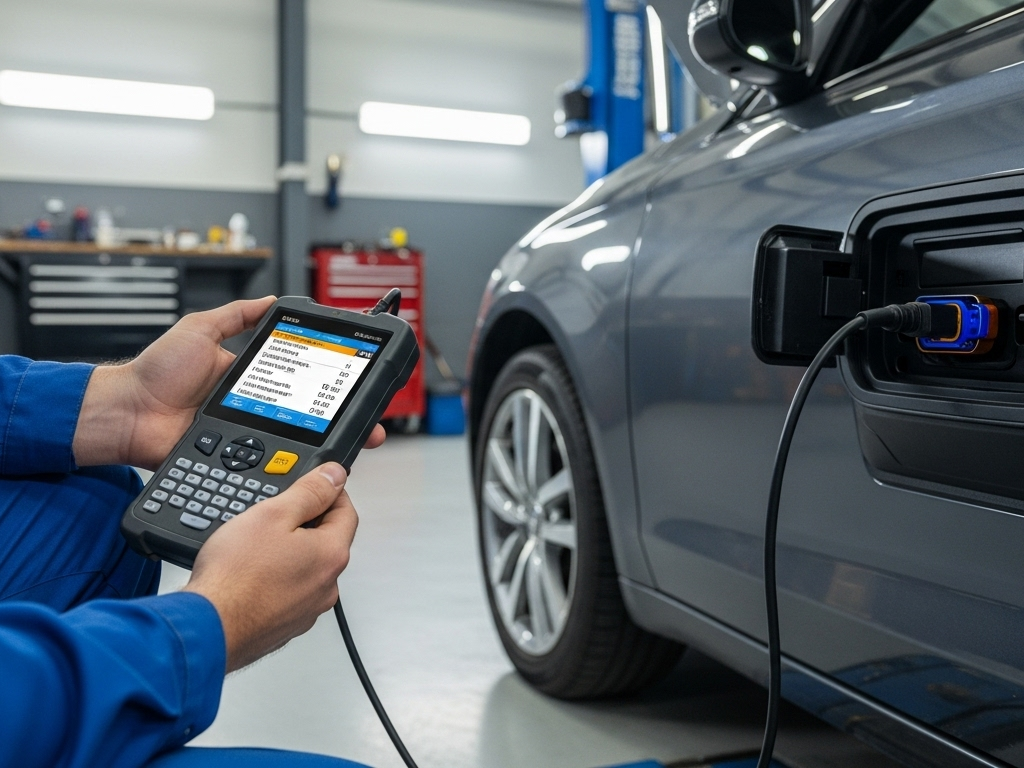
Up-to-date electric ride readers are increasingly integrating fundamental functionality, regarding focused on both typical On-Board Diagnostics II (OBD2) compatibility and Tire Pressure Monitoring System (TPMS) union. Numerous non-gasoline vehicles utilize OBD2 ports for gathering necessary system metrics, facilitating technicians and possessors to recognize anticipated glitches. Furthermore, consistent TPMS association provides true tire load reports, assisting to optimized safety and combustion saving. This fusion of OBD2 reception and TPMS technology demonstrates a significant advance in voltage-driven vehicle analysis.
Tire Monitoring Frequency Variations: Western Europe vs. North American Zone vs. Asia-Pacific - A Complete Comparison
Such networks responsible for controlling tire inflation—TPMS—operate on individual radio signals, leading to significant regional differences. USA predominantly utilizes 315 MHz, though some late-model vehicles are adapting to 433 MHz. The Continent mandates 433.92 MHz, a precise frequency to secure harmonization across domains. The East exhibits a diverse landscape, with distinct territories using 315 MHz, others 433 MHz, and still others employing a blend of both. This variation causes challenges for maintenance hubs and transportation users when dealing with replacement TPMS units or diagnostic tools, demanding careful validation of regional standards to sidestep troubles and warrant proper efficiency of the TPMS.
Vehicle Scanners for EV Cars: TPMS Readings & Frequency Interpretation
New vehicle scanners are increasingly expanding to accept battery-operated motors, principally with respect to wheel pressure monitoring review. Unlike fuel combustion transport units, electric transport present particular obstacles when it comes to wheel pressure system inspection. Many battery-powered vehicles use alternative tire info systems frequencies requiring the detector to verifiably analyze the signal in use. This functionality provides experts to solely display tire pressure but also detect the definite wave being transmitted by the tire sensor receivers, helping in meticulous inspection of issues.
The US Tire Pressure Monitoring Systems Ranges: What Have to Know?
Decoding the world of tire TPMS can be a hurdle, primarily due to the varying spectra utilized across the continent, Asia, and the United States. The EU’s vehicles predominantly use 433.92 MHz, while multiple Asian countries employ 315 MHz and 433.92 MHz, creating a difficult situation for engineers. In the US, both 315 MHz and 433.92 MHz are common, with 315 MHz being more extensive. Ergo, understanding these regional distinctions is required for accurately attending to TPMS deficiencies and selecting the appropriate programming tools.
Developing this Fundamentals: Motor Vehicle Scanning, EV Automobiles, accompanied by TPMS Unit Wave Detection
Considering professional car experts, exclusively absorbing specific basics about automotive diagnostics, battery-powered automobile platforms, together with tire surveillance instrument rate observing indicates one crucial progressive level. This arenas extend about initial strategies, involving advanced implements together with experience to rightly detect as well as remedy intricate hurdles concerning tire performance, energy configuration functionality, in addition to drive unit snag indicators. Also, precisely isolating pressure sensor transmitter broadcasts – regularly vary across particular companies and trim levels – usually required to smooth configuration.
Electric Auto Inspection: Using OBD2 Scanners to Troubleshoot TPMS
Examining Tire Pressure Monitoring Systems pressure monitoring devices in electric vehicles zero-emission cars often requires more than just visual inspection. Modern OBD2 scanners offer considerable ability to retrieve TPMS data and discover potential malfunctions. Utilizing these machines, technicians can decode fault codes, inspect sensor health, and even carry out sensor checks, allowing for precise diagnosis of tire monitoring errors and minimizing downtime. Those is especially significant given the rising complexity of EV platforms.
Exploring TPMS Frequencies: A Hands-on Explanation for Continental Europe, Far East, and the US & Canada
Successfully handling tire pressure monitoring systems amongst the Continent, Far East, and the US & Canada needs a exhaustive knowledge of the distinct broadcast ranges they operate on. Different than a consistent system, all parts habitually employs specific signal extents. To illustrate the EU principally counts on 315 MHz band and 433.92 Megahertz, while US and Canada usually adopts 315 MHz band nevertheless some updated vehicles have the potential to carry electric vehicle scanner 433 million nine hundred twenty kHz. Asia-Pacific reveals a more fragmented environment, with several spectral regions being employed, contingent upon the area and auto maker.
- Evaluate local regulations regarding radio wave.
- Review your car's handbook for designated spectrum.
- Implement a signal reader fit to translating several signals.