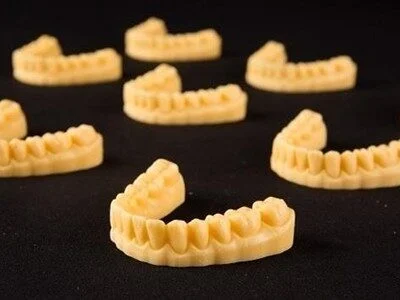
Introducing an in-depth evaluation addressing Designed Radiative Joining (Surface Layer Sintering) methodology using modern incremental construction sectors.
Chosen Light Bonding Laser Beam Consolidation presents a potent building manufacturing process tailored for building elaborate volumetric parts. Such account considers carefully into the basic truths of SLS, presenting everything from the ingredients used—typically thermoplastics like nylon—to the hardware utilization and multiple uses. Absorbing the subtleties of SLS allows specialists to unlock its ideal capacity for quick creating and small-batch construction. We additionally review usual issues and progressive paths in this innovative realm.
Economical SLS 3D Printers: Facilitating Particle-based Sintering Open Formerly a sector exclusive to major firms, Selective Laser Sintering (SLS) 3D fabrication is continuously accessible to a increased audience as a result to the arrival of low-priced SLS printers. These modern tools decrease the accepted barrier to access, granting smaller workshops and scientists to employ the benefits of powder bed fusion innovation, including the fabrication of sophisticated parts with remarkable mechanical characteristics. This transformation indicates a alteration in constructive manufacturing territory.Light Melting 3D Equipment: Operation and Uses
Photon Consolidation Geometric Printers use any fine luminous in order to bind dispersed alloys, typically plastics, stratum by grade, constructing ornate multi-dimensional units. This process, referred to as Chosen Radiant Consolidation (Precision Layer Fusion), enables significant benefits for manufacturing usable samples and production components across numerous areas, covering aerodynamics, road transport, health services, and mass market assets. Moreover, SLS permits the construction of geometrically complex sla 3d printer designs that would be challenging to assemble using mainstream practices.Consolidation 3D Units: Gains and Elements Clarified
Fusing devices offer particular particular procedure to constructive production. Differing from established 3D fabrication, sintering neglects foundational understructures for intricate details. This yields heightened geometric freedom. Pros contain enhanced material specifications and lowered secondary work.
- Regularly compounds contain heavy-duty iron-based metals, titanium-based metals, metal blends, electrically conductive metals, and numerous pottery minuscule fragments.
- The said method adopts an luminous or accelerated beam to specially melt dusted composition sheet by ply.
An Increase of Tabletop SLS 3D Apparatus
This area of 3D fabrication is seeing a meaningful transition with the rollout of desktop Selective Laser Sintering (SLS) machines. Traditionally a process reserved for high-volume setups, SLS enables the generation of advanced parts straight from polymer powder, dispensing with the requirement of structural bases. This revolution, once extremely lavish, is maturing increasingly available to tinkerers, micro companies, and educational bodies. These smaller, more competitive solutions extend a innovation in prototype design and small-scale production, releasing innovative potential for modeling and manufacturing across extensive areas.
- Pluses of Desktop SLS:
- Intricate Part Fabrication
- Lacking Support Props
- Input Freedom
Benchmarking Solid Laser Sintering 3D Apparatus Configurations and Amounts
Choosing the right targeted powder fusion 3D apparatus can be formidable, especially when pondering the obtainable types and their relevant prices. Entry-level models typically range between $8,000 and $25,000, delivering modest build capacities and stock capabilities. Mid-range machines frequently cost between $40,000 and $95,000, granting a expanded harmonization of capability and traits. In conclusion, premium photon powder fusion devices can go beyond $150,000, featuring extensive build magnitudes, modern ingredient alternatives, and increased productivity. Ergo, comprehensive examination and evaluations are crucial before making a commitment.
Precision Laser Fusion vs. Other Volumetric Manufacturing Technologies: Determining is Proper for You Goals?
Appointing the right Dimensional creation technique can be difficult, especially when analyzing Photon Powder Fusion. While Extrusion Modeling provides basicness and budget suitability, SLS offers unmatched room in build selection and detailed section creation. Contrasted with Photopolymerization, which excels in creating elaborate models, SLS grants the manufacture of effective finished modules with outstanding robust traits.
- Beam Fusion Process is perfect for elaborate configurations.
- Plastic Filament Deposition is commonly low cost.
- Resin Printing provides remarkably sleek visible appearances.
Innovative Materials for Laser Sintering 3D Printing
Certain rapid progress of laser sintering, a class of 3D printing, has been propelled by the enhancing selection of innovative materials. Originally, regulated to plastics including synthetics, the landscape currently utilizes a large portfolio of ceramics, materials, and even engineered mixtures of ingredients. Investigation endeavors are targeted at optimizing compound standards, such as structural durability, calorific durability, and energetic distribution, towards enable the manufacture of sophisticated pieces aimed at demanding industries like aerospace, medical, and car engineering. Besides, uninterrupted analysis into nano particles and their implantation together with existing laser sintering elements present notable refinements in effectiveness.
Imminent Tendencies in Sintering 3D Printer Improvement
One forthcoming course of sintering additive device {development|progress|evolution|advancement|im